
A traditional Job’s Wednesday turmeric & tahini rice pudding from Beirut
The ongoing attacks on Lebanon, and I say Lebanon because the attacks on Beirut stopped (for now) a few weeks ago, have made me feel demotivated about sharing stuff. The things that I do often; writing, posting, sharing. I haven’t touched my camera since January. This is not a post for pity, but an attempt at narrating reality. Or at least my reality. What I am experiencing. Others might not be feeling the same way. Others might be resuming their daily routines as if nothing happened. Some never had their routines disturbed at all. Mine have been.

I see people doing stuff. I don’t know if it’s true or it’s what I see through my perception, but I feel that everyone is faking it, doing it for the show—and that’s not a judgement, but an observation. I want to resume doing things for fun. I want us to be happy for real, not as a distraction or out of “resilience”.
The other day I saw a report on Job’s Wednesday, the last Wednesday in April as observed by Muslims. Specifically in Beirut, Job’s Wednesday (Orba’a Ayoub) used to be observed by all residents of Ras Beirut regardless of their religion. The report showed elderly women on the Ramle El Bayda beach awkwardly performing for the camera dressed in decorated outfits. While I don’t mind the celebration and maintaining traditions, I felt it was too staged for the camera.
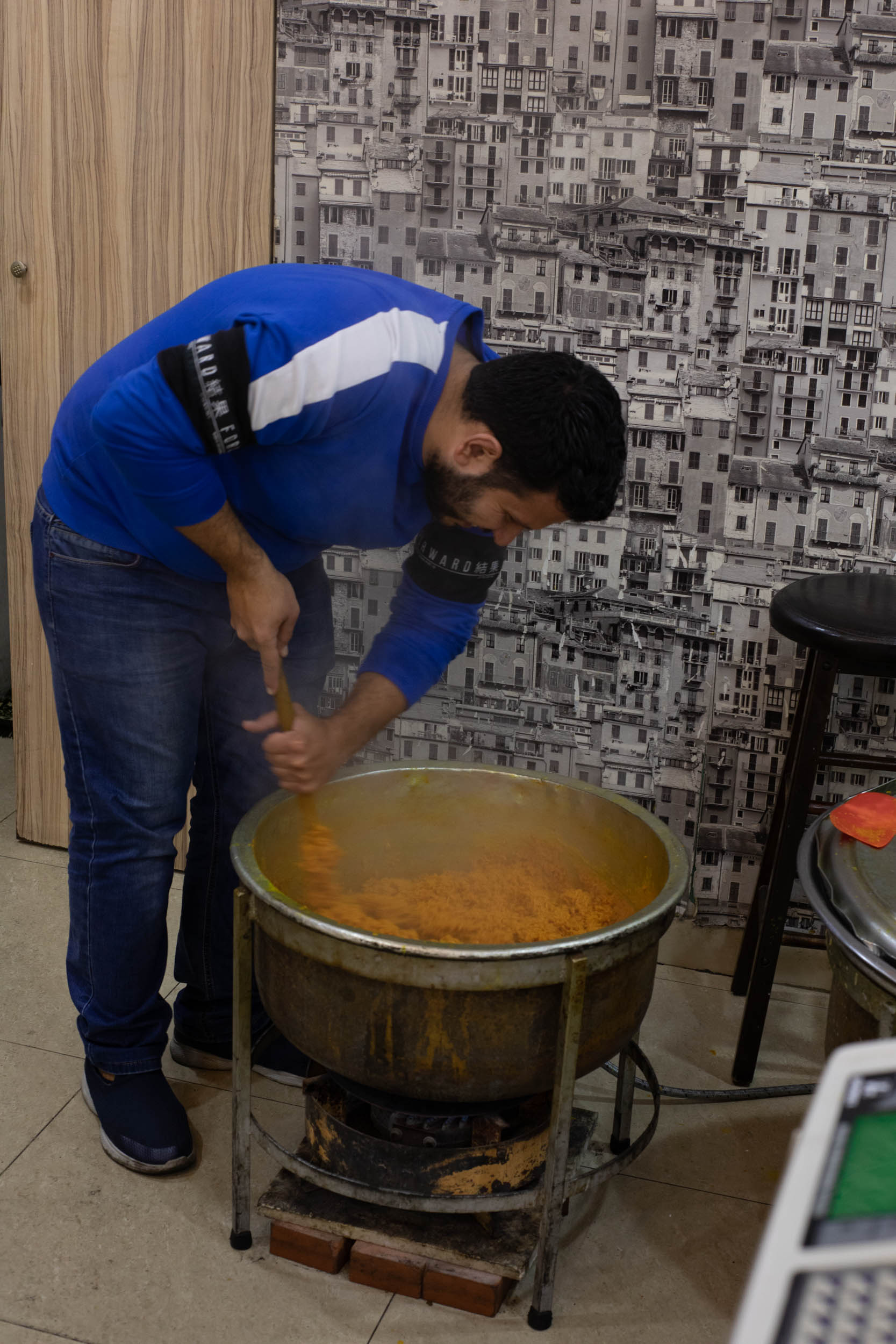
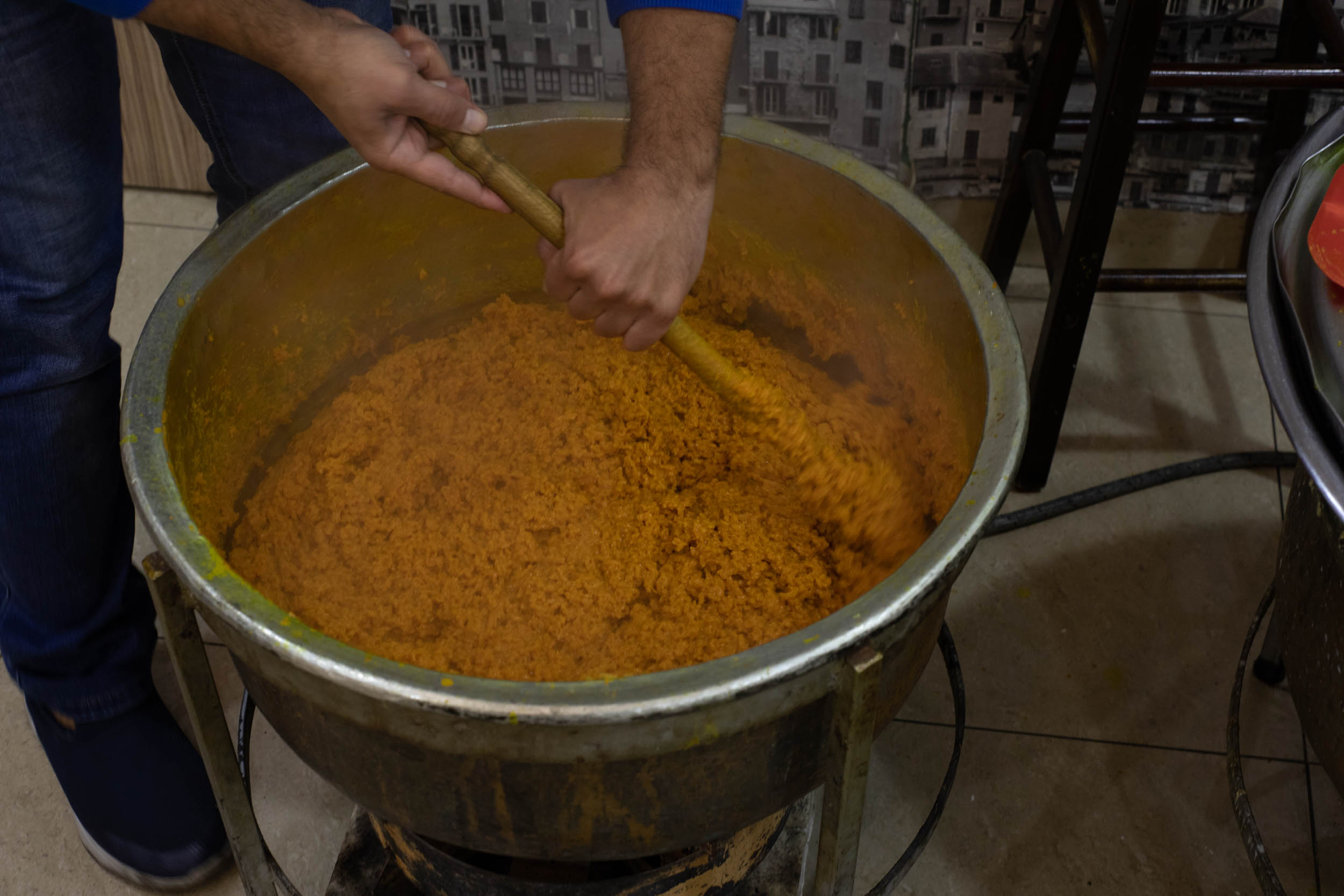
The residents of Beirut still to this day keep this tradition. It is a commemoration of the prophet Job, Ayoub in Arabic, who is said to have swam in the waves of the Ramle El Bayda beach to heal from the skin disease he was suffering from. Job is said to have been tried by God and despite his suffering he remained faithful and patient, a virtue attributed still to this day. On his day, Beirutis gather to make Mfatta’a, a fudge-like dish made from overcooked rice, colored and flavored with turmeric, tahini, and sugar.
Mfatta’a is cooked in a large pot and requires as much stirring as Job’s patience. And that’s why it is one of the fading recipes of Beirut. A few sweets shops in Beirut still make it, but it is not among the popular and requested sweets and I wouldn’t be surprised if, a few years from now, it completely disappears from the food scene. I documented the recipe in my book Bayrūt The Cookbook (published in 2021) to introduce it to more people and to keep it as a valuable cultural treasure. In 2023, Dar Onboz, a wonderful Lebanese publishing house, had a storytelling event at Beit Beirut, a renovated building at the crossing between east and west Beirut, and they brought a master in Mfatta’a to serve the warm pudding in cups on the spot, as opposed to the cold fudge commonly sold with the white plates in sweets shops.

I think that, despite having the outer crises reflecting on the internal crises, it is important that there are groups and individuals still maintaining traditions for years to come. At least when we—the ones who have been feeling too depressed to celebrate—are ready to join, the celebrations are still happening.
Get the recipe, and more recipes, in Bayrūt The Cookbook